
Dupattas: A Complete Guide to Choosing the Right Dupatta for Every Occasion
Introduction to Dupattas
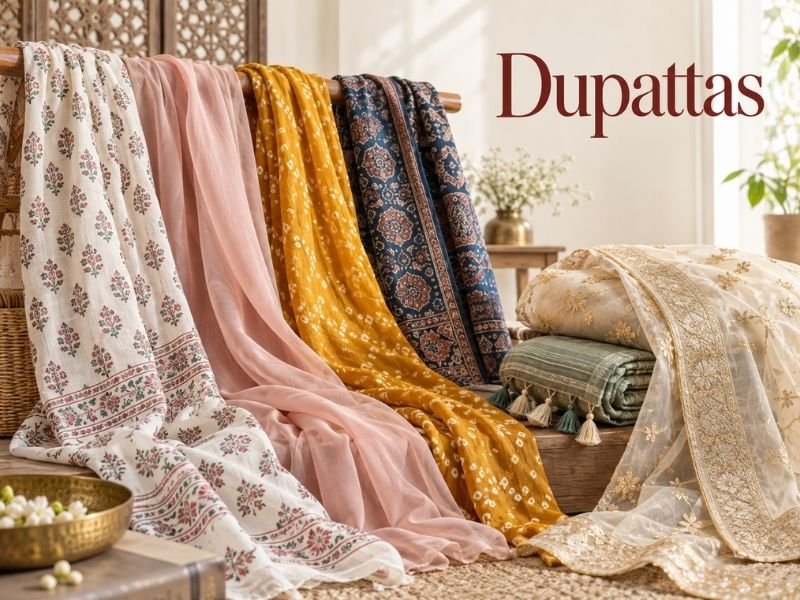
Dupattas are an essential part of Indian fashion, combining traditional elegance with versatile styling. Traditionally worn with salwar suits, kurtas and other ethnic outfits, a dupatta can add colour, texture, contrast and character to an ensemble. Today, dupattas are also styled creatively with contemporary outfits, making them a useful addition to a modern wardrobe.
From lightweight everyday fabrics to richly detailed handwoven textiles, dupattas are available in different materials, patterns, colours, borders and weaving styles. The right dupatta can transform a simple outfit into a more complete and polished look without requiring an entirely new wardrobe.
For shoppers who appreciate Indian textiles and regional craftsmanship, dupattas also provide an opportunity to explore the visual language of traditional weaving while keeping styling flexible and practical.
Types, Styles and Important Aspects of Dupattas
Dupattas vary considerably in their fabric, construction, appearance and styling possibilities. Understanding these differences can help you choose one that works well with your existing clothes.
Cotton Dupattas
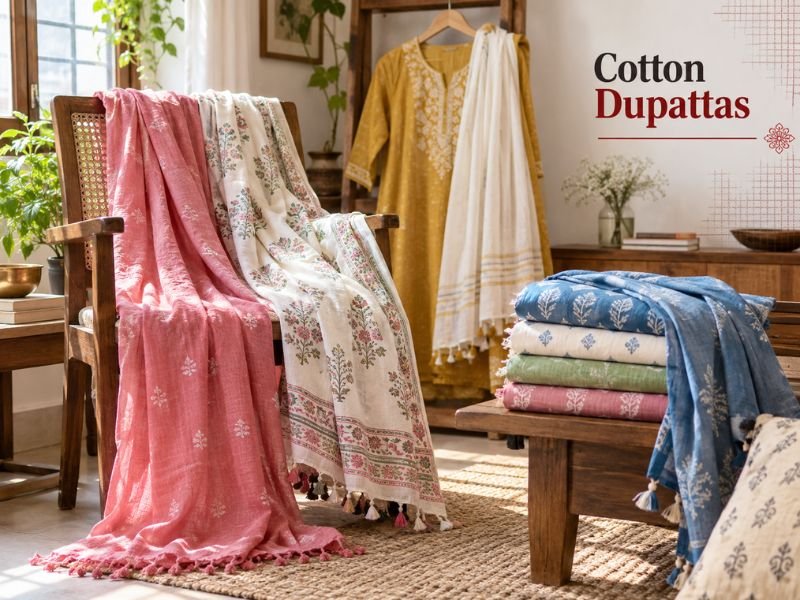
Cotton dupattas are a versatile choice for everyday ethnic dressing. They can complement kurtas, cotton suits and other casual outfits. Depending on the weave and finish, cotton can have anything from a simple appearance to a more decorative character.
For regular use, consider the weight, texture and care requirements of the fabric before selecting a dupatta.
Cotton-Silk and Blended Textiles
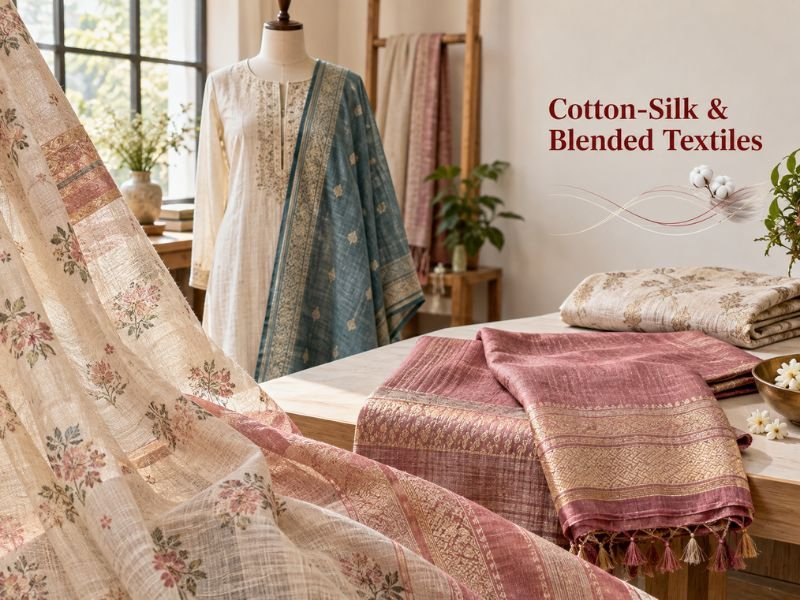
Cotton-silk textiles combine characteristics of different fibres and can create a distinct balance of texture and visual richness. Such dupattas can work particularly well when you want something that feels more distinctive than a basic everyday accessory.
Always check the product description for the exact material composition rather than assuming the fabric from its appearance alone.
Handloom Dupattas
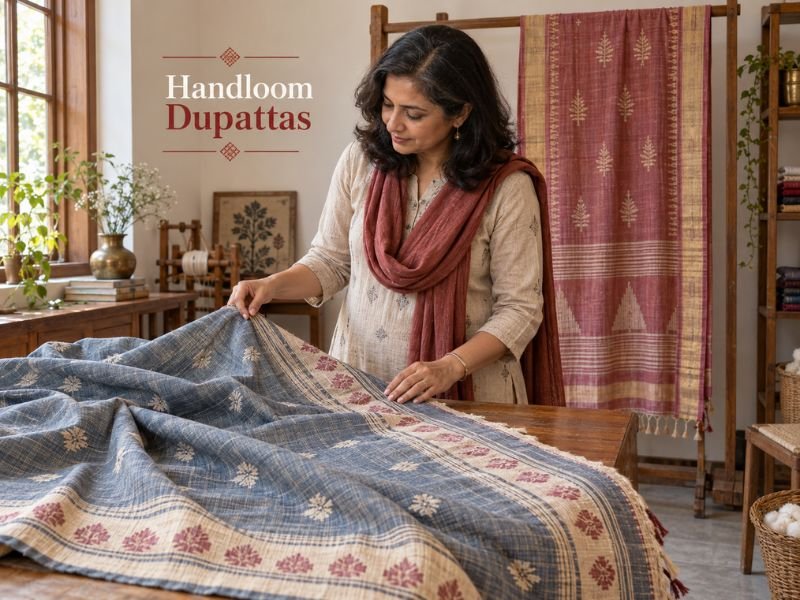
Handloom dupattas are appreciated for their connection to India’s textile traditions. Regional weaving practices can produce distinctive textures, borders, motifs and colour combinations.
A handloom dupatta can bring a craft-focused element to an otherwise simple outfit and can also be styled with clothing from different regions and traditions.
Stoles and Lightweight Drapes
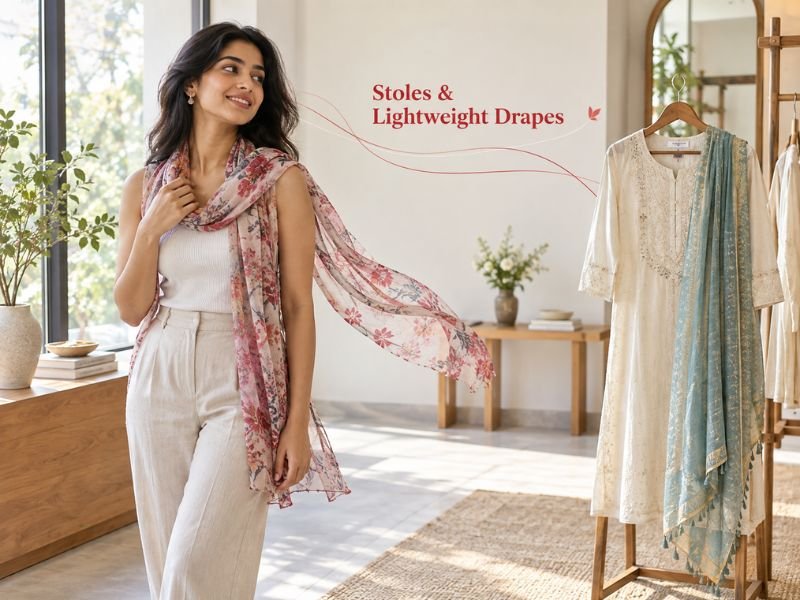
Some dupattas are designed with a lighter, narrower or more versatile drape and may also be styled as stoles. These can be useful when you want an accessory that works with both ethnic and contemporary clothing.
How to Choose the Right Dupatta
Choosing a dupatta involves more than matching its colour to your outfit. Fabric, proportion, design and intended use all influence how well it works with your wardrobe.
Consider the Fabric
Start by considering where and how you plan to wear the dupatta. Lightweight fabrics can be convenient for casual dressing, while more structured or decorative textiles may create a stronger visual impact.
If you have a preferred fabric, read the material information carefully before purchasing.
Match Colours Thoughtfully
A dupatta does not always need to be an exact colour match for your outfit. Contrasting or complementary colours can create a more interesting appearance, while similar shades can create a subtle and coordinated look.
Neutral dupattas can work with a wide range of outfits, whereas stronger colours can become the focal point of a simple ensemble.
Pay Attention to Borders and Motifs
Borders can significantly influence the overall appearance of a dupatta. Woven borders, decorative edges, traditional motifs and other detailing can add definition to the drape.
When pairing a detailed dupatta with printed clothing, consider the overall balance so that the outfit does not appear visually crowded.
Check the Length and Width
The proportions of a dupatta affect how easily it can be draped. A larger piece offers more styling possibilities, while a lighter or narrower design may be easier to manage for casual wear.
Before purchasing online, review the listed dimensions whenever they are provided.
Think About Your Existing Wardrobe
A versatile dupatta should ideally work with multiple outfits. Before choosing one, consider your existing kurtas, suits, dresses and other ethnic clothing.
A carefully selected colour or neutral design can make one dupatta useful across several combinations.
Popular Styles, Varieties and Choices
Indian dupattas reflect the country’s rich textile traditions. Different regions are known for distinctive weaving techniques, motifs, borders and colour combinations.
Handwoven styles can bring subtle texture and craftsmanship to an outfit, while printed designs may offer greater variety in patterns. Embroidered and decorative dupattas can be suitable when you want additional detail, while simpler woven designs can work well for understated styling.
Dupattas can also differ in how they are finished. Some may have decorative borders or patterned ends, while others focus on the fabric and weave itself.
The best choice ultimately depends on your personal style, the clothing you already own and the occasions for which you plan to use the accessory.
Why Explore Dupattas on SaleManch?
SaleManch brings together Indian clothing and craft-focused categories designed for shoppers interested in traditional and contemporary styles. The Dupattas category provides an opportunity to explore different textile aesthetics and consider accessories that can complement a variety of outfits.
SaleManch also highlights clothing and crafts from different parts of India, making it easier to discover regional influences while choosing pieces for your wardrobe.
Whether you prefer understated styling or enjoy adding a distinctive textile element to your outfit, a thoughtfully chosen dupatta can become one of the most versatile accessories in your collection.
Tips for Choosing Dupattas
- Check the fabric: Read the material details carefully to understand the textile before purchasing.
- Consider the occasion: Choose simpler styles for everyday use and more decorative designs when appropriate for special occasions.
- Review measurements: Check the listed length and width to understand how the dupatta will drape.
- Think about colour coordination: Choose complementary, contrasting or neutral shades according to your outfit.
- Look at the border: Borders can change the overall appearance and visual balance of a dupatta.
- Consider the weight: Think about whether you prefer a lightweight drape or a more substantial textile.
- Check care instructions: Different fabrics and embellishments may require different methods of care.
- Think about versatility: A colour or design that works with multiple outfits can be more useful in the long term.
- Consider your personal style: Select patterns, colours and textiles that genuinely suit your wardrobe.
- Read the complete description: Check the material, dimensions, design details and other information provided before making your decision.
Frequently Asked Questions
What is a dupatta?
A dupatta is a traditional Indian clothing accessory commonly worn with ethnic outfits such as kurtas and salwar suits. It can also be styled with contemporary clothing.
What fabrics are commonly used for dupattas?
Dupattas can be made from various textiles, including cotton, silk, cotton-silk blends and other fabrics. The exact material depends on the individual design.
How do I choose a dupatta for a kurta?
Consider the kurta’s colour, pattern, fabric and overall style. A contrasting dupatta can add visual interest, while a coordinated shade can create a more subtle appearance.
Can a dupatta be worn with contemporary outfits?
Yes. Depending on its design and proportions, a dupatta can be styled with dresses, tunics and other contemporary clothing.
What is a handloom dupatta?
A handloom dupatta is produced using a handloom weaving process. Its appearance may reflect the regional textile traditions, weaving techniques and craftsmanship associated with its origin.
How should I select the right dupatta colour?
Consider the colours already present in your outfit. You can choose a complementary shade, a contrasting colour or a neutral tone depending on the look you want to create.
Are dupattas suitable for everyday wear?
Yes. The suitability depends on the fabric, weight, design and your personal preferences. Simpler and practical textiles can be useful for regular dressing.
How can I style a dupatta?
You can drape it over one or both shoulders, wear it across the front or experiment with different traditional and contemporary draping methods according to the outfit.
What should I check before buying a dupatta online?
Check the fabric, dimensions, colour information, design details, care instructions and any other specifications provided in the product description.
Can one dupatta be worn with multiple outfits?
Yes. A versatile colour, pattern or textile can complement several outfits. Neutral and coordinated designs are particularly easy to incorporate into different wardrobes.
Conclusion
Dupattas are more than traditional accessories; they are versatile pieces that can change the character of an outfit through colour, texture, pattern and draping. From everyday textiles to craft-inspired handwoven styles, there are many ways to incorporate them into Indian and contemporary wardrobes.
Explore the Dupattas category on SaleManch and discover textile styles that can complement your personal fashion preferences while adding a distinctive Indian touch to your wardrobe.
Dupattas