
Dress Materials: A Complete Guide to Fabrics, Styles, Designs and Everyday Ethnic Wear
Understanding Dress Materials
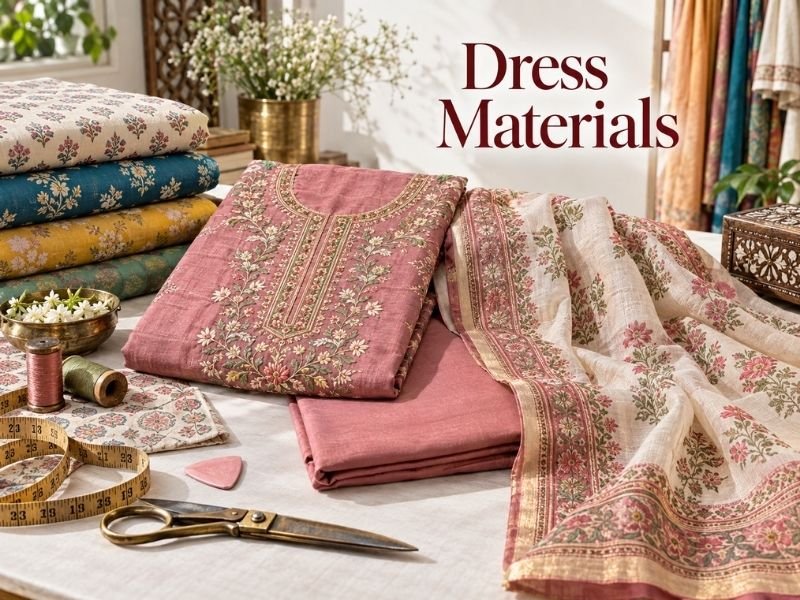
Dress materials are a versatile choice for women who enjoy creating personalised ethnic outfits. Unlike ready-to-wear clothing, an unstitched dress material gives you the flexibility to choose the fit, silhouette, sleeve style, neckline and overall finishing according to your preference.
A typical dress material may combine fabric pieces intended for the main outfit along with coordinating components such as a dupatta, depending on the design and set. They are available in different fabrics, colours, patterns, embroidery styles and traditional craft techniques, making them suitable for everyday wear as well as festive and occasion dressing.
For shoppers who appreciate Indian textiles and regional craftsmanship, dress materials also provide an opportunity to explore distinctive weaving and embroidery traditions while selecting an outfit that can be customised to personal taste.
Types and Styles of Dress Materials
Cotton Dress Materials
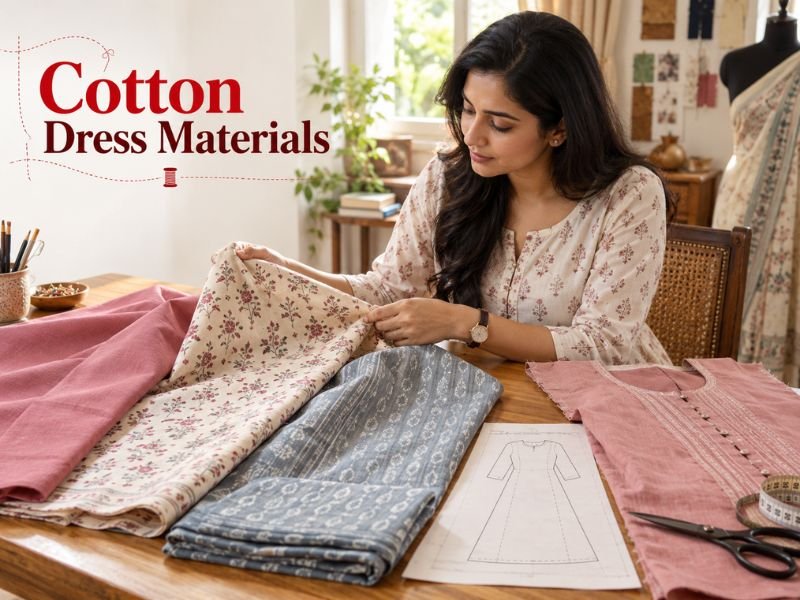
Cotton dress materials are a practical choice for people who prefer a classic fabric for regular ethnic wear. Cotton can be styled into straight-cut suits, A-line silhouettes, flared designs and other customised patterns.
The final appearance depends on the weave, print, embroidery and tailoring. Simple cotton fabrics can work well for understated outfits, while detailed surface designs can create a more decorative appearance.
Cotton-Silk and Silk-Blend Dress Materials
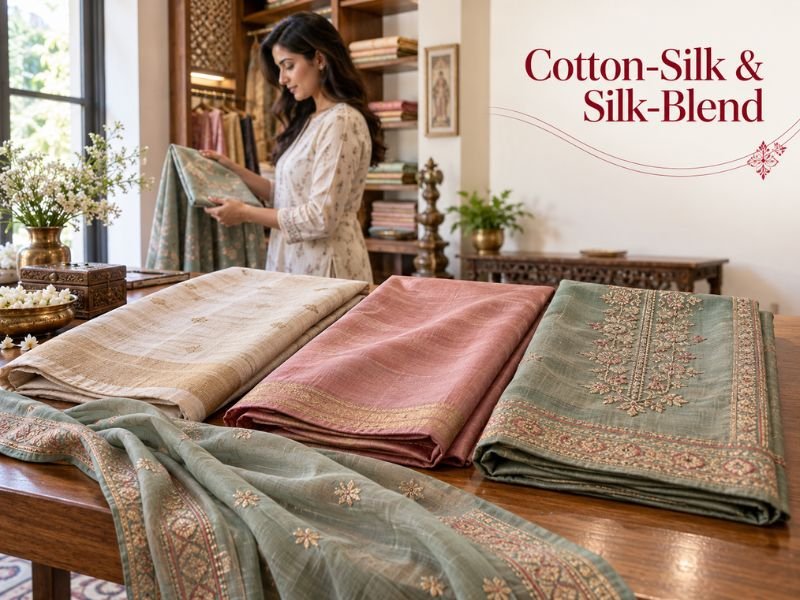
Cotton-silk and similar blended fabrics offer a different visual character from purely cotton materials. They can be selected when you want an ethnic outfit with a more refined appearance.
Such fabrics can be paired with traditional borders, woven details, embroidery or decorative dupattas. The choice of tailoring plays an important role in determining whether the finished outfit looks simple or more occasion-oriented.
Handloom Dress Materials
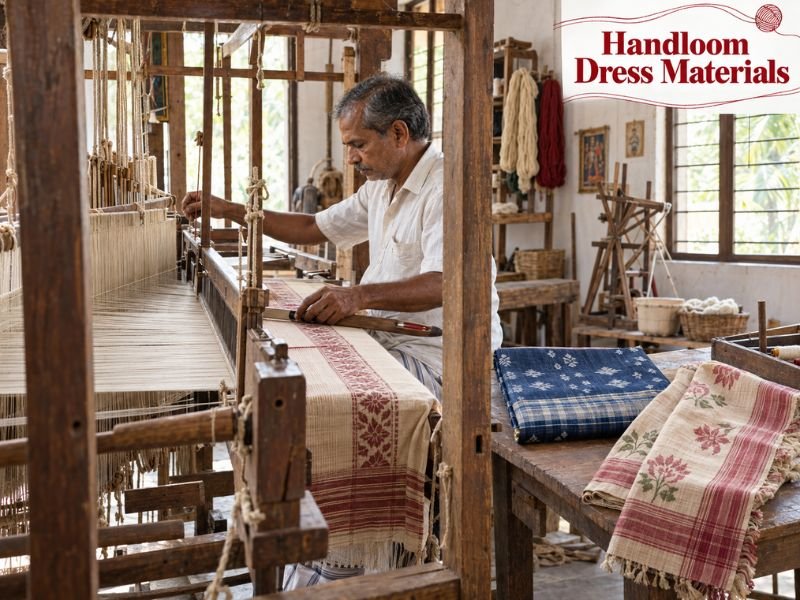
Handloom dress materials are valued for their connection with traditional weaving practices. The fabric can showcase distinctive textures, patterns and regional characteristics.
When selecting a handloom dress material, it is useful to understand the craft associated with it and pay attention to the fabric description, weave and finishing details provided by the seller.
Embroidered Dress Materials
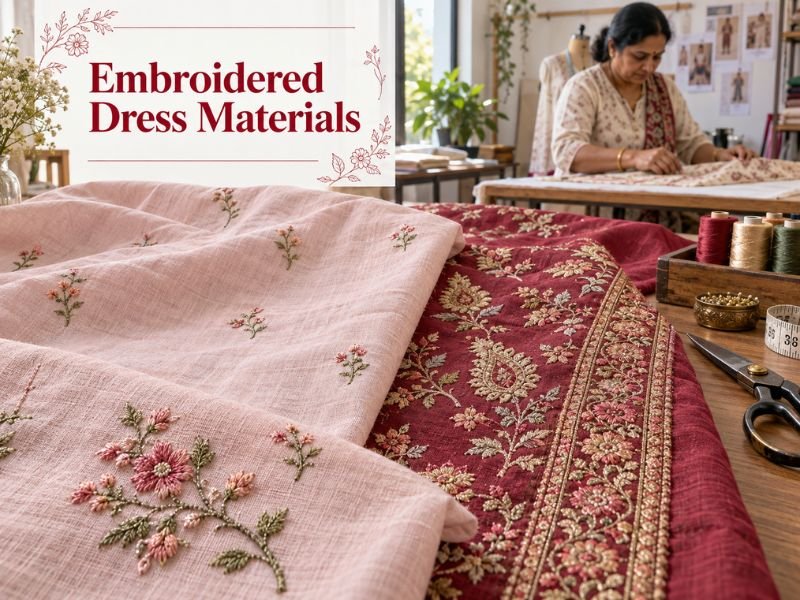
Embroidery can add visual detail to an otherwise simple fabric. Indian dress materials are available with different forms of decorative embroidery, from delicate floral patterns to more elaborate traditional motifs.
The amount and placement of embroidery can influence the overall appearance of the finished garment, so consider whether you prefer subtle detailing or a more prominent design.
Printed Dress Materials
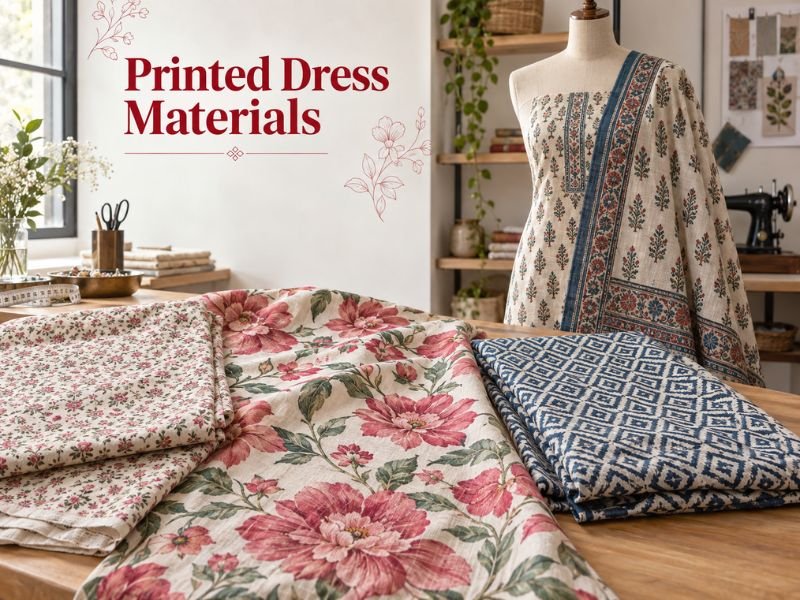
Printed fabrics offer a wide range of possibilities, including floral, geometric, traditional and contemporary patterns. Prints can make an outfit visually distinctive without requiring extensive embroidery.
The scale of the print is also worth considering. Smaller motifs can create a restrained appearance, while larger patterns can become the main visual element of the outfit.
How to Choose the Right Dress Material
Consider the Fabric First
Fabric affects the overall appearance, fall and styling possibilities of a dress material. Think about where and when you intend to wear the finished outfit before selecting the material.
For regular use, many shoppers prefer fabrics that are easy to incorporate into their existing wardrobe. For festive or special occasions, decorative fabrics and detailed craftsmanship may be more suitable.
Look at the Craft and Design
Traditional Indian crafts can give dress materials a distinctive identity. Chikankari, woven designs, decorative borders, printed motifs and other textile techniques can create very different looks.
If craftsmanship is important to you, read the product information carefully to understand whether the design is hand-embroidered, handwoven, printed or produced using another technique.
Choose Colours According to Your Style
Colour is one of the easiest ways to personalise an ethnic outfit. Soft neutrals and pastel shades can create an understated appearance, while deeper or brighter colours can make the outfit more prominent.
Instead of selecting a colour only because it is fashionable, consider which shades complement your existing wardrobe and the occasions for which you are likely to wear the outfit.
Think About Tailoring
One of the biggest advantages of dress materials is customisation. Before purchasing, consider the type of silhouette you want and whether the available fabric will work for your preferred design.
Neckline, sleeves, length, flare and overall fit can all influence the final appearance. A good tailoring plan can turn the same basic material into very different styles.
Popular Dress Material Choices
Dress materials can be broadly explored through several design preferences. Floral patterns remain a familiar choice for ethnic wardrobes, while geometric and traditional motifs offer a more structured appearance.
Hand embroidery is often preferred by shoppers who appreciate detailed craftsmanship, whereas printed fabrics can provide a more expressive and versatile look. Traditional borders and coordinated dupattas can further enhance the visual character of an outfit.
Regional textile traditions also make dress materials interesting for shoppers who want something connected to Indian craftsmanship. Different weaving and embroidery centres have their own distinctive visual languages, allowing customers to explore ethnic fashion beyond standard designs.
Why Explore Dress Materials on SaleManch?
SaleManch brings together categories that make it easier to explore Indian clothing and traditional crafts in one place. The dress materials category is particularly useful for shoppers who want the freedom to customise an ethnic outfit rather than choosing only from pre-stitched silhouettes.
The platform also provides an opportunity to discover clothing connected with different Indian craft traditions. This makes the shopping experience more than simply selecting a colour or pattern; customers can also learn about the textile and craftsmanship behind their chosen style.
When exploring dress materials on SaleManch, take time to read the available fabric, craft, design and set information so that your choice matches your expectations.
Tips for Choosing Dress Materials
Check the Fabric Details
Always read the fabric information before making a selection. Different materials behave differently during tailoring and everyday use.
Review the Set Components
Check what components are included with the dress material and whether the set matches your intended outfit design.
Consider the Intended Occasion
A simple printed material may suit everyday styling, while detailed embroidery, traditional borders or elaborate designs may be more appropriate for festive dressing.
Plan the Outfit Before Tailoring
Think about the desired neckline, sleeves, length and silhouette before taking the material to a tailor. Planning beforehand can help you make better use of the available fabric.
Pay Attention to Craft Details
If you specifically want handloom weaving or hand embroidery, read the product description carefully and look for clear information about the craft and construction.
Frequently Asked Questions
What are dress materials?
Dress materials are fabric sets used to create customised ethnic outfits. They may contain fabric for the main garment and coordinating components depending on the particular set.
Are dress materials stitched or unstitched?
Dress materials are commonly sold in an unstitched form, allowing the wearer to customise the final garment according to personal measurements and preferred design.
Which fabric is best for dress materials?
There is no single best fabric. Cotton, cotton-silk, silk blends and other textiles can be suitable depending on comfort preferences, styling requirements and the intended occasion.
Can dress materials be customised?
Yes. One of their main advantages is the ability to customise elements such as neckline, sleeve length, garment length and overall silhouette through tailoring.
Are dress materials suitable for everyday wear?
Yes. Simple fabrics and understated designs can be suitable for everyday ethnic wear, depending on personal preference and lifestyle.
Can dress materials be worn for festive occasions?
Yes. Materials featuring detailed embroidery, decorative borders, distinctive textiles or elaborate designs can be tailored into outfits suitable for festive and special occasions.
What is the difference between printed and embroidered dress materials?
Printed designs are created on the fabric using printing techniques, while embroidery involves decorative threadwork or other stitched detailing. Both can create very different visual effects.
Why choose handloom dress materials?
Handloom dress materials can offer distinctive weaving characteristics and a connection to traditional Indian textile craftsmanship. They are a popular choice among people interested in heritage textiles.
How should I choose the colour of a dress material?
Choose colours based on your personal style, existing wardrobe, intended occasion and the type of appearance you want to create. Considering how the colour will work with the complete outfit is more useful than selecting it in isolation.
Where can I explore dress materials online?
You can explore the Dress Materials category on SaleManch to discover different fabrics, designs and Indian textile styles and choose an option that suits your preferred way of dressing.
Conclusion
Dress materials offer the freedom to create an ethnic outfit around your own measurements, styling preferences and sense of fashion. From everyday fabrics and printed patterns to handloom textiles and detailed embroidery, there are many ways to explore this versatile category.
If you enjoy personalised ethnic wear and Indian textile craftsmanship, explore Dress Materials on SaleManch and find a style that fits your wardrobe and your individual taste.
Dress Materials