
Blouses: A Complete Guide to Styles, Fabrics, Designs and Indian Ethnic Wear
Introduction to Blouses
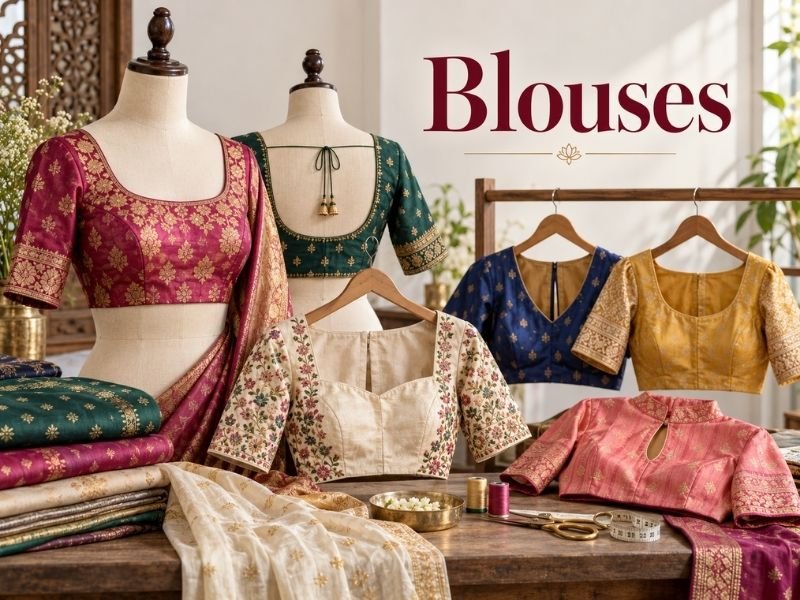
Blouses are an important part of Indian ethnic dressing and can significantly influence the overall appearance of an outfit. Whether paired with a saree, lehenga or other traditional attire, the right blouse can complement the fabric, colours and styling of the complete look.
Modern blouses are available in many fabrics, silhouettes, sleeve patterns, necklines, colours and decorative details. Traditional textile techniques also add another dimension, allowing shoppers to explore blouses inspired by India’s diverse weaving and craft traditions.
A blouse can be chosen for everyday wear, festive occasions, celebrations or more formal gatherings. The key is to consider the outfit it will be paired with and select a design that balances comfort, fit and personal style.
Types, Styles and Important Aspects of Blouses
Handloom and Traditional Textile Blouses
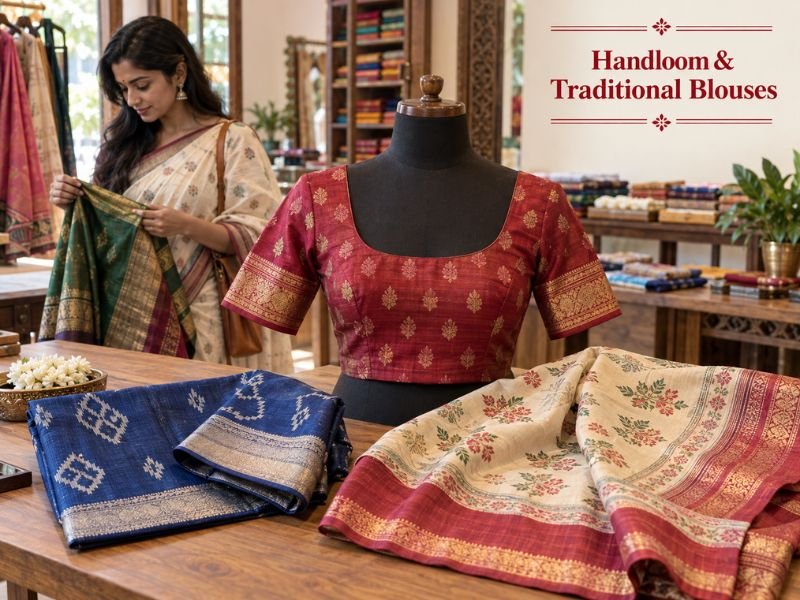
Handloom textiles have a distinctive place in Indian clothing. Blouses made from traditional woven fabrics can complement sarees while adding regional character to an outfit.
Different weaving traditions may feature characteristic textures, borders, colour combinations and patterns. If you appreciate Indian craftsmanship, exploring handloom blouse fabrics can be a way to incorporate traditional textiles into contemporary dressing.
Cotton Blouses
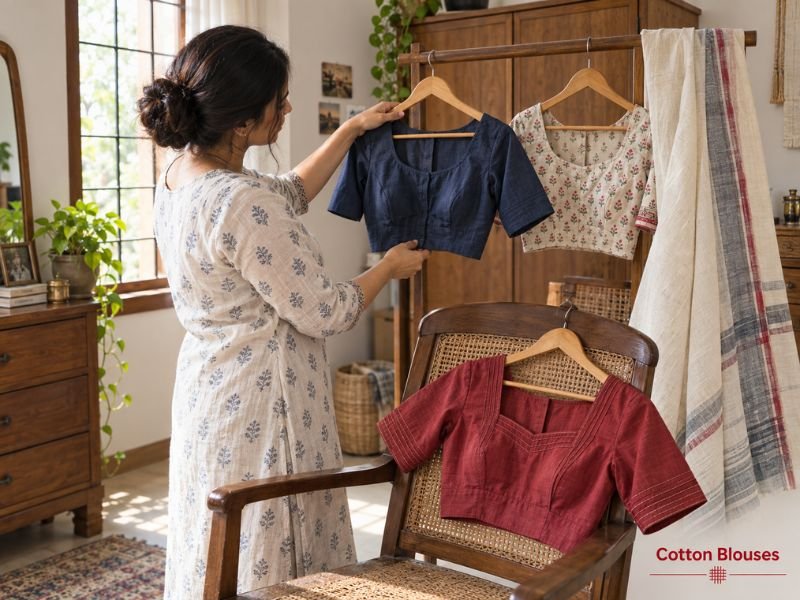
Cotton blouses are a practical choice for everyday ethnic wear. The fabric can work well with a wide variety of sarees and can be tailored into simple or detailed silhouettes.
Cotton also provides flexibility in styling. Depending on the weave and design, it can be used for understated daily outfits as well as more traditional combinations.
Silk and Silk-Blend Blouses
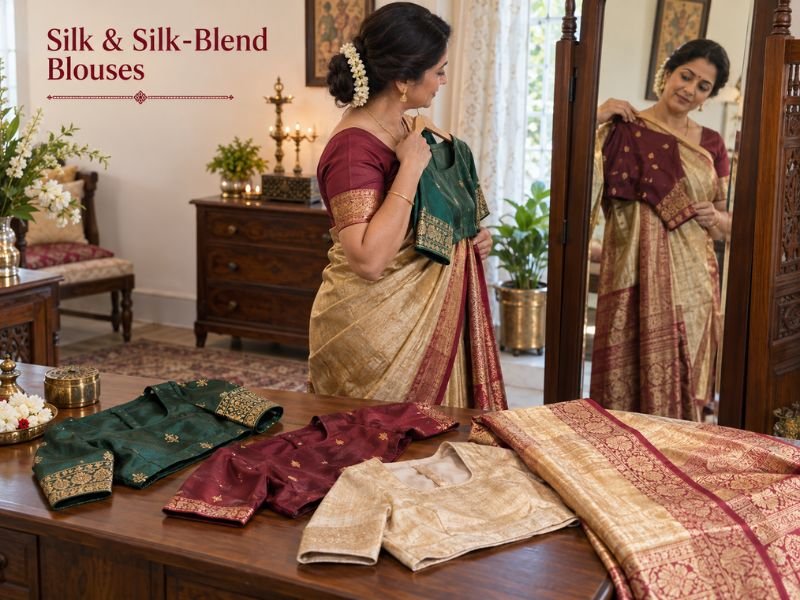
Silk and silk-blend fabrics are commonly associated with more dressed-up ethnic styling. Their appearance can complement sarees and other traditional garments intended for festive or special occasions.
The blouse does not necessarily need to match the saree exactly. A carefully selected contrasting or coordinating colour can create a more distinctive overall outfit.
Blouse Pieces for Custom Tailoring
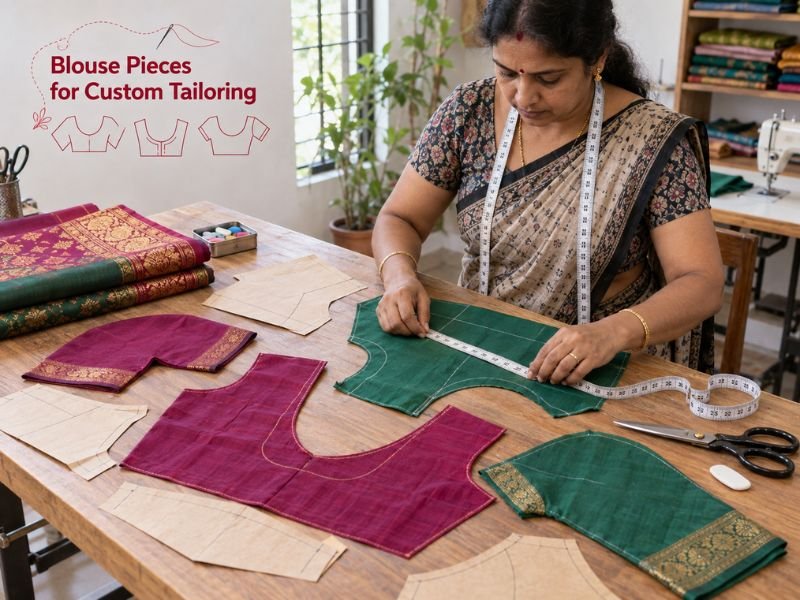
Blouse fabric pieces allow you to customise the final garment according to your preferred measurements and design. This is particularly useful when you want control over the neckline, sleeves, length and overall silhouette.
Custom tailoring can also help coordinate the blouse with a saree that has a distinctive border or pattern.
How to Choose the Right Blouse
Consider the Saree or Main Outfit
Start by considering the garment with which the blouse will be worn. Look at its colour, fabric, border, motifs and overall visual character.
A heavily patterned saree may work well with a comparatively simple blouse, while a plain or understated saree can provide more room for an expressive blouse design.
Select the Right Fabric
Fabric affects both appearance and styling. Cotton can create a more relaxed and traditional look, while silk and other decorative textiles may provide a more formal appearance.
Consider the texture and fall of the fabric as well as how it will work with the saree. The combination should feel visually balanced.
Choose the Colour Carefully
The blouse can either coordinate with the saree or deliberately create contrast. Matching shades create a cohesive appearance, while contrasting colours can make the blouse a stronger feature of the outfit.
When choosing a colour, consider whether you want the blouse to blend into the overall outfit or stand out as a separate design element.
Think About Neckline and Sleeves
Neckline and sleeve choices have a major influence on the finished blouse. Round, square, V-shaped and other neckline styles can produce different visual effects.
Sleeves can also vary in length and construction. The best choice depends on your personal preference, the saree style and the occasion.
Pay Attention to Fit
A well-planned fit can make a significant difference to the appearance and comfort of a blouse. Measurements should be considered carefully before tailoring.
Important measurements may include the bust, shoulder, armhole and desired blouse length. If you are using a blouse piece, discuss your preferred design with the tailor before cutting the fabric.
Popular Blouse Styles and Choices
Blouse styling has evolved considerably while continuing to draw inspiration from traditional Indian clothing. Simple everyday silhouettes remain popular, while decorative designs can be used for festive dressing.
Some shoppers prefer blouses that closely coordinate with the saree, whereas others use contrasting colours and patterns to create visual interest. Traditional borders, woven motifs and handcrafted details can also become defining elements of the outfit.
Regional textiles offer another way to explore blouse styles. India’s weaving traditions produce fabrics with different textures, patterns and colour combinations, giving shoppers opportunities to create outfits that feel distinctive without relying solely on modern trends.
The versatility of blouses also means that one design can sometimes be styled with different sarees, provided the colours and textile characteristics complement each other.
Why Explore Blouses on SaleManch?
SaleManch provides a dedicated space for exploring Indian clothing and traditional craft categories. The Blouses category can be useful for shoppers looking for blouse fabrics and styles that complement their ethnic wardrobe.
For customers interested in Indian textile traditions, exploring craft-based clothing can also provide a closer connection to regional weaving and design practices. Rather than treating a blouse simply as an accessory to a saree, you can consider its fabric, craftsmanship and design as an important part of the complete outfit.
SaleManch makes it easier to browse different clothing categories while keeping traditional Indian craftsmanship at the centre of the shopping experience.
Tips for Choosing Blouses
Match the Design to the Occasion
For everyday use, a practical and versatile blouse can be easier to style across different outfits. Festive occasions may allow for more decorative fabrics, distinctive borders or elaborate designs.
Check the Fabric Description
Read the available fabric information carefully. Understanding whether the material is cotton, silk, a blend or another textile can help you make a more informed choice.
Plan Before Tailoring
Decide on your neckline, sleeve length, blouse length and overall style before giving the fabric to a tailor. A clear plan reduces the chances of unnecessary alterations.
Consider Your Existing Wardrobe
A versatile blouse colour or design can work with multiple sarees. If you want to build a practical wardrobe, consider how the blouse will coordinate with pieces you already own.
Balance Traditional and Contemporary Styling
Traditional fabrics can work beautifully with modern silhouettes. You do not always need to choose between heritage-inspired textiles and contemporary styling; thoughtful tailoring can bring both together.
Frequently Asked Questions
What is a blouse in Indian ethnic wear?
A blouse is a fitted upper garment commonly worn with sarees and other traditional outfits. It can vary considerably in fabric, neckline, sleeves, length and decorative detailing.
Which fabric is suitable for blouses?
Cotton, silk, silk blends and various traditional woven fabrics can be used for blouses. The suitable choice depends on the outfit, occasion, comfort preference and desired appearance.
Can blouse fabric be customised?
Yes. Blouse fabric can generally be tailored according to personal measurements and preferred design elements such as neckline, sleeves and length.
How should a blouse match a saree?
A blouse can either coordinate closely with the saree or create a deliberate contrast. Consider the saree’s colour, fabric, border and motifs when making the choice.
Are handloom blouses suitable for modern outfits?
Yes. Traditional handloom fabrics can be paired with contemporary blouse silhouettes, creating a combination of traditional textile character and modern styling.
What should I consider when choosing a blouse colour?
Consider the saree colour, existing wardrobe, occasion and whether you want a coordinated or contrasting appearance. The blouse does not always have to be an exact colour match.
Why is blouse fit important?
The blouse is generally a fitted garment, so accurate measurements can influence both its appearance and comfort. Measurements should be considered carefully before tailoring.
Can the same blouse be worn with different sarees?
Yes, a versatile blouse can work with multiple sarees when its colour, fabric and design complement them. Neutral or adaptable designs can be particularly useful for wardrobe versatility.
Are cotton blouses suitable for everyday wear?
Cotton blouses can be a practical option for everyday ethnic dressing. Their suitability ultimately depends on the fabric, construction, personal preference and the saree with which they are paired.
Where can I explore blouses online?
You can explore the Blouses category on SaleManch to discover different Indian textile styles, fabrics and designs suitable for creating personalised ethnic outfits.
Conclusion
Blouses offer an easy way to personalise traditional Indian dressing. From handloom textiles and cotton fabrics to silk-inspired styles and custom-tailored silhouettes, the right blouse can complement an outfit while reflecting your individual preferences.
Explore the Blouses category on SaleManch to discover Indian textile craftsmanship and find styles that can become a versatile part of your ethnic wardrobe.
Blouses